Why Most MVPs Fail Before Launch
The idea is rarely the problem. What gets skipped in the rush to ship usually is.
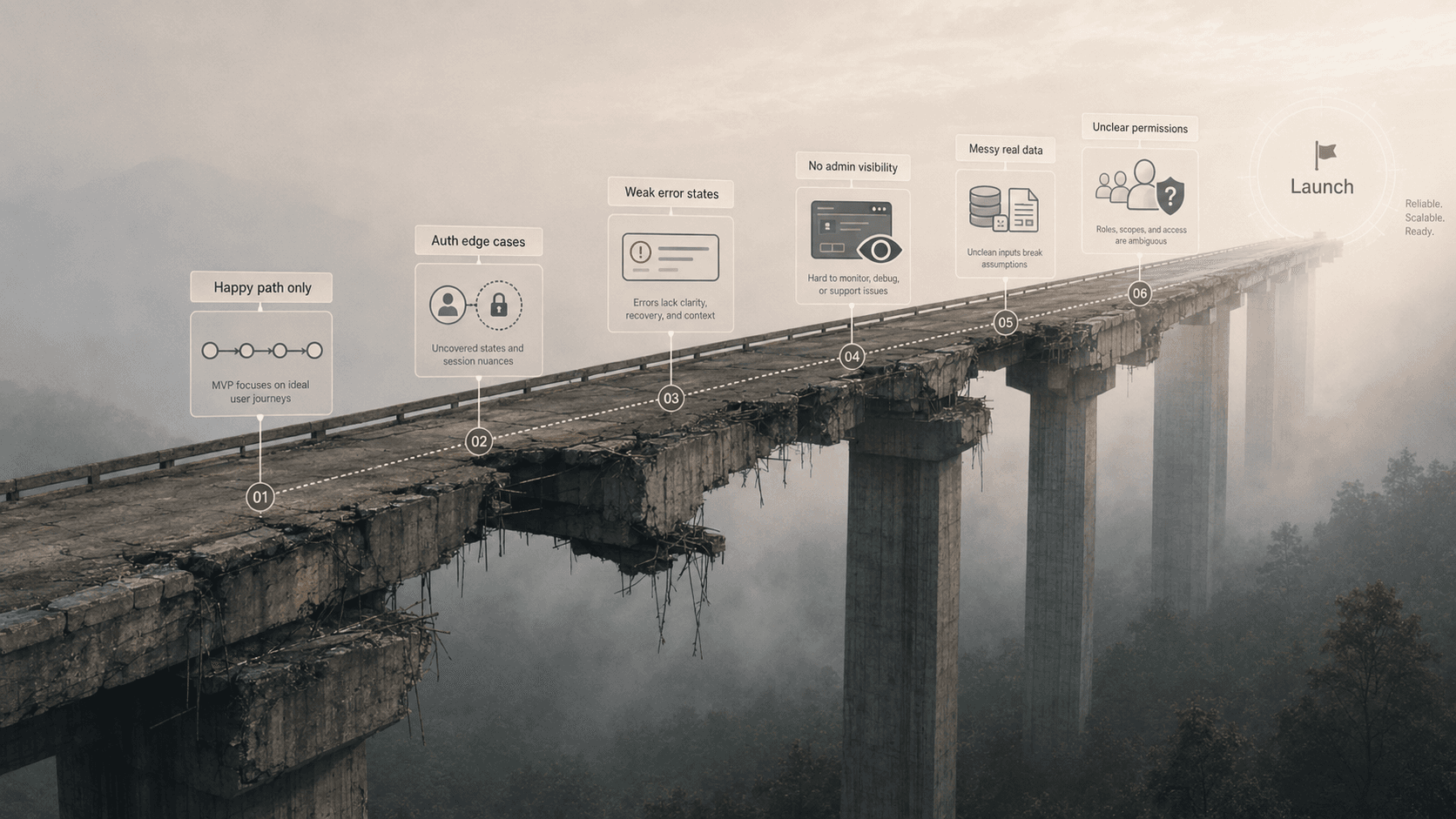
Most MVPs do not fail because the idea was bad.
They fail because the team shipped a demo and called it a product.
I have seen this more than once. The core feature works. The screens look clean. A founder shows it to a few people and the response is positive. Everyone agrees it is ready. Then the first real user signs up, tries to do something slightly outside the happy path, and the whole thing falls apart.
Not because the logic was wrong. Because nobody thought past the happy path.
Here is what usually gets skipped in the rush to ship:
Authentication that actually handles edge cases. Password resets, session expiry, account lockouts, and role-based access are not features you add later. By the time you need them, users are already frustrated or data is already at risk.
Error states that communicate something useful. A blank screen or a generic "something went wrong" message is not an error state. It is an invitation to churn. Users need to know what happened and what to do next.
Admin visibility before it becomes urgent. When something breaks in production, someone needs to see what happened without calling a developer. If there is no internal tooling, every incident becomes a fire drill.
Real data that does not behave like test data. Names with apostrophes. Addresses in unexpected formats. Uploads that are too large or the wrong type. These are not edge cases. They are the first things real users will try.
A clear answer to "who can do what." Permissions feel like an implementation detail until two people with different roles access the same record and neither one understands why the other can see it.
None of this is glamorous work. It does not show well in a demo. But it is the difference between software that survives contact with real users and software that quietly loses their trust before they ever say a word.
Shipping fast matters. But shipping something that only works under controlled conditions is not shipping — it is rehearsing.
Founders and product teams: what is one thing you wish you had built into your MVP from the start, before users found the gap for you?